Kidney Transplant Recipient Defeats Cancer
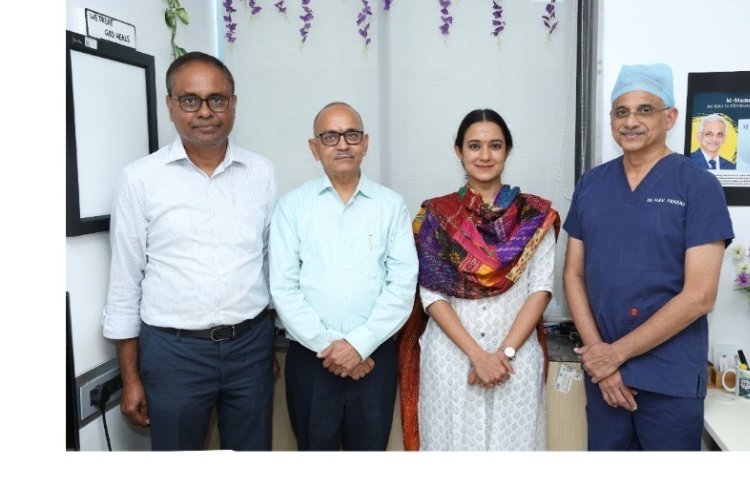
Doctors at KIMS Hospitals Secunderabad have successfully treated a rare and life-threatening intestinal cancer in a 42-year-old woman who has been living with a functioning transplanted kidney for the past 17 years. In a remarkable achievement, the medical team was able to cure the cancer while also preserving the transplanted kidney that has been functioning well since 2009. The details were shared by Dr. Mounika Boppana, Consultant Medical Oncology & Hemato-Oncology, who led the treatment.
The patient, a resident of Hyderabad, underwent a kidney transplant in 2009 using a kidney donated by her mother. The transplant surgery was successfully performed by Dr. Ch. Uma Maheshwara Rao. Since then, she has been on immunosuppressive medications to prevent rejection of the transplanted organ. In June 2025, she presented to KIMS Hospitals with severe abdominal pain, recurrent vomiting, and a weight loss of nearly 15 kg over three months. Detailed investigations revealed a high-grade lymphoma of the intestine, which was causing repeated episodes of bowel obstruction. Treating such a cancer in a kidney transplant recipient posed an extremely complex challenge.
Cancer treatment in organ transplant recipients is particularly difficult because chemotherapy further suppresses immunity, increasing the risk of life-threatening infections. On the other hand, reducing immunosuppressive drugs can damage the transplanted kidney. Keeping these risks in mind, the team initiated chemo-immunotherapy. The nephrology and medical oncology teams worked in close coordination, carefully adjusting both immunosuppressive medications and chemotherapy doses. This meticulous balancing helped control the cancer while preserving kidney function.
After three cycles of chemo-immunotherapy, the tumorshowed an excellent response. However, rapid tumorshrinkage led to the formation of an abnormal connection (fistula) between the small intestine and large intestine. This resulted in severe diarrhea, malnutrition, and further weight loss, making surgery urgently necessary.
Dr. M.B.V. Prasad, General & GI Laparoscopic Surgeon, successfully performed a surgery to remove the diseased segments of the small and large intestines and rejoin the bowel. Performing intestinal surgery in a patient with severely suppressed immunity carries a high risk of poor wound healing and serious infections, but the surgical team managed the procedure with great expertise. Following surgery, the patient received specialized care from the critical care team and recovered completely within four weeks. She subsequently completed the remaining three cycles of chemo-immunotherapy successfully.
A follow-up whole-body PET scan confirmed complete remission of the cancer. Importantly, the transplanted kidney continues to function normally.
Dr. Mounika Boppana said, “Organ transplant recipients are at increased risk of serious infections and certain cancers because of long-term immunosuppressive therapy. Careful planning and close monitoring at every stage enabled us to completely cure the cancer while preserving the transplanted kidney.”
Speaking on the occasion, Dr. V.S. Reddy, Nephrologist & Kidney Transplant Specialist, said, “Treating cancer in a kidney transplant recipient is one of the most challenging situations in medicine. We must protect the transplanted kidney while simultaneously eradicating the cancer. The coordinated efforts of the departments of nephrology, medical oncology and surgery, and the critical care team helped us overcome what initially appeared to be an impossible challenge.”
Dr. M.B.V. Prasad added, “Intestinal surgery in a severely immunocompromised patient is extremely complex. The successful outcome was possible only because of seamless multidisciplinary teamwork and comprehensive postoperative care.”
Doctors at KIMS Hospitals stated that this rare case demonstrates how multidisciplinary expertise, advanced medical technology, and integrated patient care can achieve excellent outcomes even in the most complex clinical situations.
 Disclaimer: Welthi.com does not guarantee any specific results as a result of the procedures mentioned here, and the results may vary from person to person.