Eight-Year-Old Boy Recovers from Severe Kidney Injury Following Snakebite After Hemodialysis at KIMS Cuddles, Kurnool
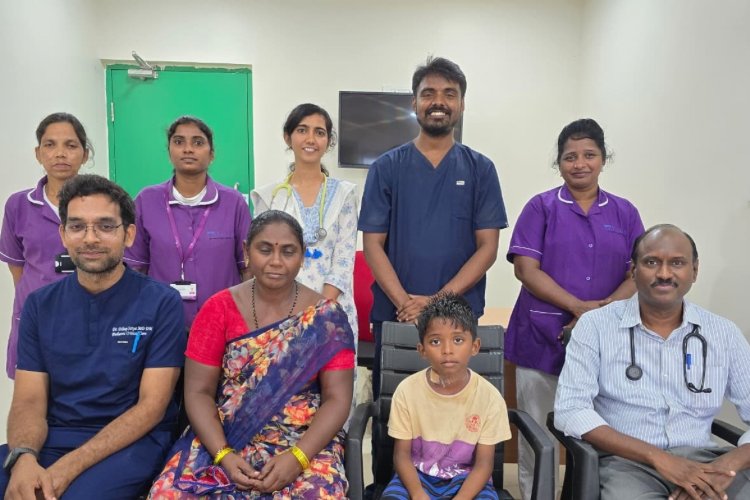
An eight-year-old boy from Sanjamala village in Kurnool district, who developed severe acute kidney injury following a snakebite, has recovered after timely intensive care, haemodialysis and close monitoring at KIMS Cuddles, Kurnool.
The child, identified as Rithik, was bitten by a snake on his left leg while playing in the premises of his house. A tight tourniquet was applied around the affected limb for few hours, following which he was also given local traditional treatment. Over the next 24 hours, his urine output declined significantly and he developed swelling of the body and rapid breathing. He was subsequently brought to KIMS Cuddles, Kurnool, where he was evaluated and admitted to the Paediatric Intensive Care Unit (PICU).
According to Dr. P. V. Ravi Kiran, Consultant Paediatric Intensivist, the child was found to have severe acute kidney injury, with serum creatinine at 7.5 mg/dL and blood urea at 170 mg/dL. His blood pressure was also significantly elevated.
“Given the severity of the kidney injury and the marked reduction in urine output, the child required close monitoring and intensive management in the PICU. Haemodialysis was initiated and continued for few days, along with appropriate management of his blood pressure and other supportive measures. With timely intervention, his urine output gradually improved and kidney function subsequently returned towards normal,” said Dr. Ravi Kiran.
The child responded well to treatment, with gradual improvement in urine production and renal function. After his condition stabilised, he was found to be clinically well and was discharged from the hospital.
Dr. Ravi Kiran said that snakebite can cause serious systemic complications and may affect organs beyond the site of the bite. In children, reduced urine output, swelling, breathing difficulty, changes in blood pressure, weakness, bleeding or other unusual symptoms following a snakebite should be considered warning signs requiring immediate medical attention.
“Children who suffer a snakebite should be taken to a hospital with emergency medical facilities as early as possible. Delaying hospital care in favour of unproven local treatments can allow serious complications to progress. In this child, severe kidney injury had already developed by the time he reached us. Early PICU admission, haemodialysis and comprehensive supportive care were crucial in preventing further deterioration and helping him recover,” he said.
The doctor also advised against applying a tight tourniquet or other traditional measures without medical guidance. Such practices may interfere with blood circulation and potentially cause additional complications. Immediate transportation to an appropriate medical facility and receiving antisnake venom remains the most important step following a suspected snakebite.
The case highlights the importance of early hospitalisation, continuous monitoring of organ function and access to specialised paediatric critical care and renal replacement therapy when children develop severe complications following snakebite.
 Disclaimer: Welthi.com does not guarantee any specific results as a result of the procedures mentioned here, and the results may vary from person to person.