KIMS Doctors treat 89 year old woman of kidney stones using unique keyhole surgical procedure

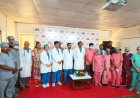
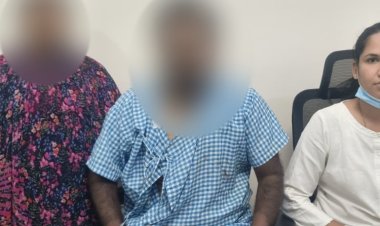
Doctors in the Genito-urinary Surgery Unit at Krishna Institute of Medical Sciences (KIMS) Hospitals, Secunderabad have performed an advanced technique for 89-year-old women suffering from kidney stone disease for the past 3 years. Due to her age factor she was not taken up for surgery elsewhere.
The 89-year-old patient came to the hospital with complaints of frequent right abdominal pain. Upon investigation, it was found that she has a 1.5 cm stone in the right kidney blocking it causing swelling. After evaluation and surgical fitness, she was taken up for Super-Perc procedure (keyhole surgery). The surgery was performed with very small incision of 4 mm on the back
Dr. Upendra Kumar Navuluru, Senior Consultant urologist, KIMS Hospitals, who performed this surgery said, “PCNL is a very complex but an innovative and effective technique to remove large kidney stones that requires surgical precision and advanced surgical skills. In this procedure, we made a small incision using a paediatric nephroscope post which the stone was broken into pieces using laser and stone fragments were removed totally using suction. The operation lasted only 30 minutes. Postoperative recovery was smooth and elderly women got discharged after 48 hours.”
“Though complex, it has become the most preferable technique to remove the kidney stones due to its advantages. However, very few numbers of urologists in India are specially trained to perform this advanced surgical procedure,” he added.
Currently, there are various methods of treatment to kidney stones - namely shock wave lithotripsy, RIRS surgery and PCNL. The main concern with all these methods is incomplete stone clearance due to migration of small fragments produced with laser lithotripsy. Hence, the newer technique of PCNL, “Super Perc” procedure was performed that utilizes suction to remove all the fragments and maintain one-way flow.
This technique results in less pain, less trauma to the kidney, an outpatient procedure for most patients, a shorter hospital stays, and a quicker recovery and return to work and activities of daily living.
 Disclaimer: Welthi.com does not guarantee any specific results as a result of the procedures mentioned here, and the results may vary from person to person.